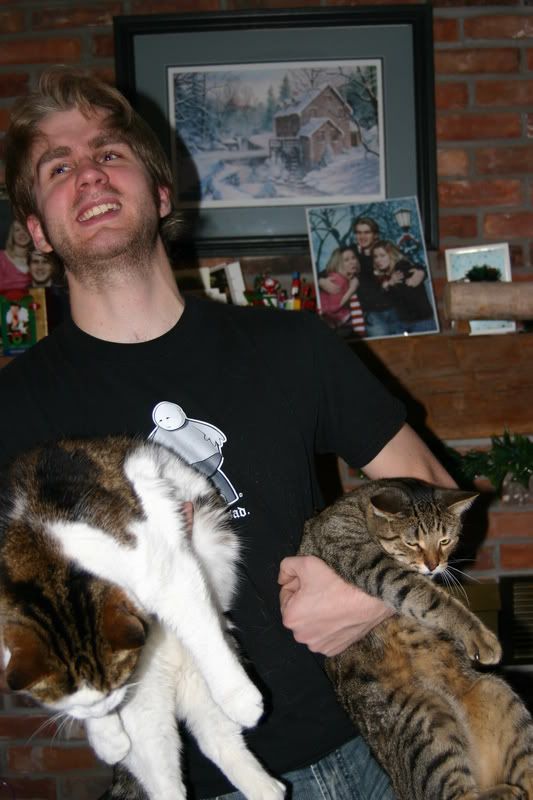
I spent about an hour and change writing my wholly uninspired review of Miracle at St. Anna. Mike Lane, who just saw that film last night, took that same hour and wrote out a review\rant that puts my feeble critique to shame.
I may have studied film. Mike Lane lives it.
I marvel at his ability to to see beyond the surface story and pick up on all the auteuristic underpinnings that lay underneath.
I am truly impressed.
Showing posts with label movie review. Show all posts
Showing posts with label movie review. Show all posts
Friday, October 17, 2008


Thursday, September 25, 2008
Chris does TIFF: Miracle at St. Anna edition
Miracle at St. Anna
Saturday, Saturday, September 13th, 8:30pm
Ryerson Theatre
A week late, and hardly insightful and indepth. But the following review encapsulates about all I have to say regarding this film.
Spike Lee’s greatest strength as a director is his uncompromising vision. Artistically I’ve always found him to be fairly hit or miss, but sometimes, through sheer strength of will alone, he’s able to elevate the quality of his films to a level they would otherwise not be able to achieve. Sadly, that vision is lacking in his latest outing, Miracle at St. Anna.
The film follows the lives of four black soldiers, of the 92nd infantry division, colloquially known as the Buffalo soldiers, after they get trapped in a small Italian village during the second World War. The film is based on a book by James McBride and for some strange reason Spike allows multiple subplots, backstorys and flashbacks to clutter up the main narrative of the film. Instead of dealing with the situation at hand, (how the fuck do we get out of Dodge), we find ourselves sitting through convoluted love triangles, the discovery of a long lost cultural treasure, the subterfuge and deception of the Italian Resistance and a handful of other plotlines that work against the film’s natural rhythm. Perhaps that’s why the film feels so bloated at just over three hours long.
Seeing as how the film’s screenwriter, McBride, also wrote the book it shouldn’t come as a surprise that all these unnecessary subplots were carried over when he adapted his own source material. I’m guessing, as a writer, he was loath to edit his babies. If McBride didn’t have the strength to cut down the length of his screenplay then Spike should have made the tough calls when he was in the editing room and chucked some of the dead weight overboard, turning this lumbering frigate of a film into a streamlined powerboat.
It’s not a bad film, or even a dull film. It’s a long, rambling, unnecessarily meandering film that you can’t help but want to be over just so you can step out to the washroom and relieve the pressure on your kidneys.
This film is destined to fall into Spike’s ‘nearly ran’ file folder, denied the honour of standing alongside his greater masterpieces. It’s a clear example of being slavishly held to the whims of the original source material and not making the proper allowances to the conventions of its newly adopted medium.
Saturday, Saturday, September 13th, 8:30pm
Ryerson Theatre
A week late, and hardly insightful and indepth. But the following review encapsulates about all I have to say regarding this film.
Spike Lee’s greatest strength as a director is his uncompromising vision. Artistically I’ve always found him to be fairly hit or miss, but sometimes, through sheer strength of will alone, he’s able to elevate the quality of his films to a level they would otherwise not be able to achieve. Sadly, that vision is lacking in his latest outing, Miracle at St. Anna.
The film follows the lives of four black soldiers, of the 92nd infantry division, colloquially known as the Buffalo soldiers, after they get trapped in a small Italian village during the second World War. The film is based on a book by James McBride and for some strange reason Spike allows multiple subplots, backstorys and flashbacks to clutter up the main narrative of the film. Instead of dealing with the situation at hand, (how the fuck do we get out of Dodge), we find ourselves sitting through convoluted love triangles, the discovery of a long lost cultural treasure, the subterfuge and deception of the Italian Resistance and a handful of other plotlines that work against the film’s natural rhythm. Perhaps that’s why the film feels so bloated at just over three hours long.
Seeing as how the film’s screenwriter, McBride, also wrote the book it shouldn’t come as a surprise that all these unnecessary subplots were carried over when he adapted his own source material. I’m guessing, as a writer, he was loath to edit his babies. If McBride didn’t have the strength to cut down the length of his screenplay then Spike should have made the tough calls when he was in the editing room and chucked some of the dead weight overboard, turning this lumbering frigate of a film into a streamlined powerboat.
It’s not a bad film, or even a dull film. It’s a long, rambling, unnecessarily meandering film that you can’t help but want to be over just so you can step out to the washroom and relieve the pressure on your kidneys.
This film is destined to fall into Spike’s ‘nearly ran’ file folder, denied the honour of standing alongside his greater masterpieces. It’s a clear example of being slavishly held to the whims of the original source material and not making the proper allowances to the conventions of its newly adopted medium.
Thursday, September 18, 2008
Chris does TIFF: RocknRolla edition
RocknRolla
Saturday, September 13, 2:30pm
Ryerson Theatre
Guy Ritchie is back doing gangster films and, sadly, that’s not a good thing. You couldn’t have a more wildly misleading opening to a movie review then that last sentence.
Ritchie’s last film, Revolver, was sadly denied a movie screen experience for North American audiences and we are all the poorer for it. An inspiring analysis of the human mind the film only recently showed up in bargain bins where it quietly went unnoticed except by the most dedicated film buffs. So perhaps that’s why Ritchie has chosen to retreat to more familiar subject matter, as an attempt to regain the buzz and counter-culture sensibilities of his earlier efforts.
Enter RocknRolla.
The film stars a veritable hodge podge of quirky personalities, played by everyone from A-list types on their way up the celebrity ladder (Gerard Butler), to venerable character actors (Tom Wilkinson) and attractive femme fatales (Thandie Newton). Trying to summarize the plot of this labyrinthine story in a few short sentences is a masochistic job meant for those with bigger brains then I posses. To call it a gangster film about the changing nature of organized crime is like saying War and Peace is a book about some ‘stuff that went down in Russia.’
RocknRolla deals with the fallout of London’s skyrocketing property values. Europe’s nouveau riche has descended on the city and the only way they can get permission to erect their new building is by linking arm’s with the local wheeler dealer types, led by big fish Wilkinson, to help grease the wheels of an intransigent bureaucracy. Butler leads a group of little fish, affectionately named the Wild Bunch, that get caught up in Wilkinson’s shady deals and unknowingly complicate matters by pinching some money that doesn’t belong to them. In the end, almost everyone involved is trying to track down an oft referenced, but never seen, ‘lucky’ painting, in a homage cribbed directly from Quentin Tarantino’s Pulp Fiction playbook.
RocknRolla lacks the punch of Ritchie’s previous gangster films, the modern classic Lock, Stock and Two Smoking Barrells and Snatch, not because RR is a bad film or even a weaker film. Rather, it’s been eight years since a Ritchie gangster film last graced the big screen and since that time a genre of filmmaking he’d help reinvigorate has become so popular that his work seems less original and groundbreaking as a result. Nothing succeeds like success.
Ritchie continues to push the genre as far as he can, with his top drawer writing, editing and direction. And even though you’ll leave the theatre impressed with the results, you can’t help but think that you’ve seen it all before.
Apparently he’s written a sequel to this film, The Real RocknRolla or some such nonsense, which he alludes to in the end credits with a James Bondian-like flourish. I think the biggest vote of confidence that I can offer RocknRolla, is that I’d be very interested in checking out what comes after.
Saturday, September 13, 2:30pm
Ryerson Theatre
Guy Ritchie is back doing gangster films and, sadly, that’s not a good thing. You couldn’t have a more wildly misleading opening to a movie review then that last sentence.
Ritchie’s last film, Revolver, was sadly denied a movie screen experience for North American audiences and we are all the poorer for it. An inspiring analysis of the human mind the film only recently showed up in bargain bins where it quietly went unnoticed except by the most dedicated film buffs. So perhaps that’s why Ritchie has chosen to retreat to more familiar subject matter, as an attempt to regain the buzz and counter-culture sensibilities of his earlier efforts.
Enter RocknRolla.
The film stars a veritable hodge podge of quirky personalities, played by everyone from A-list types on their way up the celebrity ladder (Gerard Butler), to venerable character actors (Tom Wilkinson) and attractive femme fatales (Thandie Newton). Trying to summarize the plot of this labyrinthine story in a few short sentences is a masochistic job meant for those with bigger brains then I posses. To call it a gangster film about the changing nature of organized crime is like saying War and Peace is a book about some ‘stuff that went down in Russia.’
RocknRolla deals with the fallout of London’s skyrocketing property values. Europe’s nouveau riche has descended on the city and the only way they can get permission to erect their new building is by linking arm’s with the local wheeler dealer types, led by big fish Wilkinson, to help grease the wheels of an intransigent bureaucracy. Butler leads a group of little fish, affectionately named the Wild Bunch, that get caught up in Wilkinson’s shady deals and unknowingly complicate matters by pinching some money that doesn’t belong to them. In the end, almost everyone involved is trying to track down an oft referenced, but never seen, ‘lucky’ painting, in a homage cribbed directly from Quentin Tarantino’s Pulp Fiction playbook.
RocknRolla lacks the punch of Ritchie’s previous gangster films, the modern classic Lock, Stock and Two Smoking Barrells and Snatch, not because RR is a bad film or even a weaker film. Rather, it’s been eight years since a Ritchie gangster film last graced the big screen and since that time a genre of filmmaking he’d help reinvigorate has become so popular that his work seems less original and groundbreaking as a result. Nothing succeeds like success.
Ritchie continues to push the genre as far as he can, with his top drawer writing, editing and direction. And even though you’ll leave the theatre impressed with the results, you can’t help but think that you’ve seen it all before.
Apparently he’s written a sequel to this film, The Real RocknRolla or some such nonsense, which he alludes to in the end credits with a James Bondian-like flourish. I think the biggest vote of confidence that I can offer RocknRolla, is that I’d be very interested in checking out what comes after.
Chris does TIFF: The Wrestler edition
The Wrestler
9am, Saturday, September 13
Ryerson Theatre
Darren Aronofsky blows my mind. If you have enough brain power to process that last sentence, you clearly haven’t seen any of his films.
Pi? Power drill to the forehead at the film’s climax.
Requiem for a Dream? The entire movie is like a power drill to the forehead.
The Fountain? Yah, I’m still trying to wrap my head around that one.
The point is, every time this man picks up a piece of celluloid some part of my cognitive capacity dies a horrible death.
But The Wrestler isn’t like that. This is Aronofsky working in a different gear. The film follows Mickey Rourke, as Randy ‘The Ram’ Robinson, finishing up his pro wrestling career as little more than a shadow of the man he used to be. Randy is living a life on the fringes of pro wrestling, using his fading name and reputation to help him make a couple of extra dollars. His best days behind him, Randy is forced to participate in some of wrestling’s more dangerous matches in order to pull together enough money to make a living.
However tragedy strikes and Randy’s career is stopped dead in its tracks after a near fatal heart attack. Forcibly retired Randy tries to reconnect with the people in his life that are important to him, including his estranged daughter Stephanie, Evan Rachel Wood, and Cassidy, Maria Tomei, an aging peeler at the local strip club.
Randy’s attempts to leave wrestling behind and make a life for himself in the real world prove harder than he expected and soon if he finds himself contemplating a return to the ring.
Mickey Rourke is fantastic in this film. What is this, his fifth career comeback? If his performance here doesn’t have Oscar buzz all over it, it’s because the Academy is too busy trying to unwrap the milk chocolate from all those gold statues. I’m not saying he deserves to win, but I think, at the very least, his performance deserves to be considered. Wood and Tomei also turn in respectable performances with their time onscreen.
Aronofsky does a fantastic job setting up parallel story lines between Randy and Cassidy. Both make a living by selling a fantasy to the willing masses and both have trouble adjusting to the expectations of the real world when the sun comes up. But while Randy has squandered his time in the spotlight and has nothing to show for it, Cassidy has made the most of her circumstances and plans to retire on her own terms.
Unlike Aronofsky’s other films The Wrestler is more bio pic than mind fuck. Instead of trying to broaden our horizons about what it means to be human he chooses to tell a simpler tale of a man coming to terms with his own obsolescence and how he struggles to main his identity and dignity throughout. You don’t have to be a wrestling fan to enjoy this film, although it may help a little. In the end, if you like a good story, told well, this film is for you.
9am, Saturday, September 13
Ryerson Theatre
Darren Aronofsky blows my mind. If you have enough brain power to process that last sentence, you clearly haven’t seen any of his films.
Pi? Power drill to the forehead at the film’s climax.
Requiem for a Dream? The entire movie is like a power drill to the forehead.
The Fountain? Yah, I’m still trying to wrap my head around that one.
The point is, every time this man picks up a piece of celluloid some part of my cognitive capacity dies a horrible death.
But The Wrestler isn’t like that. This is Aronofsky working in a different gear. The film follows Mickey Rourke, as Randy ‘The Ram’ Robinson, finishing up his pro wrestling career as little more than a shadow of the man he used to be. Randy is living a life on the fringes of pro wrestling, using his fading name and reputation to help him make a couple of extra dollars. His best days behind him, Randy is forced to participate in some of wrestling’s more dangerous matches in order to pull together enough money to make a living.
However tragedy strikes and Randy’s career is stopped dead in its tracks after a near fatal heart attack. Forcibly retired Randy tries to reconnect with the people in his life that are important to him, including his estranged daughter Stephanie, Evan Rachel Wood, and Cassidy, Maria Tomei, an aging peeler at the local strip club.
Randy’s attempts to leave wrestling behind and make a life for himself in the real world prove harder than he expected and soon if he finds himself contemplating a return to the ring.
Mickey Rourke is fantastic in this film. What is this, his fifth career comeback? If his performance here doesn’t have Oscar buzz all over it, it’s because the Academy is too busy trying to unwrap the milk chocolate from all those gold statues. I’m not saying he deserves to win, but I think, at the very least, his performance deserves to be considered. Wood and Tomei also turn in respectable performances with their time onscreen.
Aronofsky does a fantastic job setting up parallel story lines between Randy and Cassidy. Both make a living by selling a fantasy to the willing masses and both have trouble adjusting to the expectations of the real world when the sun comes up. But while Randy has squandered his time in the spotlight and has nothing to show for it, Cassidy has made the most of her circumstances and plans to retire on her own terms.
Unlike Aronofsky’s other films The Wrestler is more bio pic than mind fuck. Instead of trying to broaden our horizons about what it means to be human he chooses to tell a simpler tale of a man coming to terms with his own obsolescence and how he struggles to main his identity and dignity throughout. You don’t have to be a wrestling fan to enjoy this film, although it may help a little. In the end, if you like a good story, told well, this film is for you.
Monday, September 15, 2008
Chris does Tiff: Achilles and the Tortoise edition
Achilles and the Tortoise
Friday, September 12, 8:30
Ryerson Theatre
My first Takeshi Kitano TIFF experience was watching Brother at the Varsity cineplex at about 9 on a Sunday morning. I was a fledgling film student and Kitano's final arty ultra-violent gangster flick was like nothing I'd ever seen before. Since then I've made it a point to catch every Kitano film that TIFF manages to get its hands on.
Sometimes you get Zatoichi, Kitano's tale of a blind swordsman bringing justice to medieval Japan, or Dolls, his tragic story of love and lonliness....and sometimes you get Takeshis! and Glory to the Filmmaker, expermental bio pics that can challenge even the most devoted fan. S came with me to see Glory to the Filmmaker at the last fest and when Kitano trotted out the penis guitar on screen I turned to see her giving me a look of pity and disgust.
Achilles and the Tortoise is closer to Kitano's experimental bio pic phase then it is to his gangster films, although thankfully the film avoids the outlandish excesses of his previous endeavours. The story deals with young Machisu as he attempts to follow his dream of becoming a painter, despite the great tragedies in his life that threaten to block him.
The film begins with Machisu's clumsy first attempts at painting as a boy, to his efforts at finding his painterly 'voice' as a young man, before jumping forward to the modern day where Kitano takes over the role. The first two stages of Machisu's life are mostly played straight, although with any Kitano film there is always a hint of dark anarchistic comedy. It's the tale of the earnest artist, painstakingly trying to perfect his craft, no matter what the cost.
The film's third act is played for laughs all the way. Here Kitano is sending up the more pretentious elements of the art world, heaping scorn and satirizing the incomprehensible and sometimes outlandish personalities that create 'art'.
This is Kitano's third film that tries to explain how he's done with movie making and how there isn't anything original left for him to say. Throughout his entire life Machisu the painter attempts to create a great work of art but all he ever manages is to copy the works of other great painters. Kitano's career has taken a similar arc, tired of making violent gangster films, that helped craft his public persona, he has eschewed his most familar genre in an attempt at striking out and finding his own voice, with unfortunately mixed results.
This is a modest message film that never pretends it has all the answers to the questions it posits. Kitano is just as unsure as his audience about the true nature and worth of art. He offers moviegoers a little personal insight, a little tragedy and then tries to break the tension by throwing some levity on top of it all. He wants us to think and feel, but not too hard and not too long.
Relax. He says. It's just a movie. It doesn't really matter.
Friday, September 12, 8:30
Ryerson Theatre
My first Takeshi Kitano TIFF experience was watching Brother at the Varsity cineplex at about 9 on a Sunday morning. I was a fledgling film student and Kitano's final arty ultra-violent gangster flick was like nothing I'd ever seen before. Since then I've made it a point to catch every Kitano film that TIFF manages to get its hands on.
Sometimes you get Zatoichi, Kitano's tale of a blind swordsman bringing justice to medieval Japan, or Dolls, his tragic story of love and lonliness....and sometimes you get Takeshis! and Glory to the Filmmaker, expermental bio pics that can challenge even the most devoted fan. S came with me to see Glory to the Filmmaker at the last fest and when Kitano trotted out the penis guitar on screen I turned to see her giving me a look of pity and disgust.
Achilles and the Tortoise is closer to Kitano's experimental bio pic phase then it is to his gangster films, although thankfully the film avoids the outlandish excesses of his previous endeavours. The story deals with young Machisu as he attempts to follow his dream of becoming a painter, despite the great tragedies in his life that threaten to block him.
The film begins with Machisu's clumsy first attempts at painting as a boy, to his efforts at finding his painterly 'voice' as a young man, before jumping forward to the modern day where Kitano takes over the role. The first two stages of Machisu's life are mostly played straight, although with any Kitano film there is always a hint of dark anarchistic comedy. It's the tale of the earnest artist, painstakingly trying to perfect his craft, no matter what the cost.
The film's third act is played for laughs all the way. Here Kitano is sending up the more pretentious elements of the art world, heaping scorn and satirizing the incomprehensible and sometimes outlandish personalities that create 'art'.
This is Kitano's third film that tries to explain how he's done with movie making and how there isn't anything original left for him to say. Throughout his entire life Machisu the painter attempts to create a great work of art but all he ever manages is to copy the works of other great painters. Kitano's career has taken a similar arc, tired of making violent gangster films, that helped craft his public persona, he has eschewed his most familar genre in an attempt at striking out and finding his own voice, with unfortunately mixed results.
This is a modest message film that never pretends it has all the answers to the questions it posits. Kitano is just as unsure as his audience about the true nature and worth of art. He offers moviegoers a little personal insight, a little tragedy and then tries to break the tension by throwing some levity on top of it all. He wants us to think and feel, but not too hard and not too long.
Relax. He says. It's just a movie. It doesn't really matter.
Friday, September 12, 2008
Chris does Tiff: Me and Orson Welles edition
Me and Orson Welles
September 11, 9pm
Ryerson Theatre
Orson Welles is one of those rare film personalities that fascinates me outside of his body of work.
An accomplished thespian and radio artist before he ever turned to more celluloid based endeavours, his genius and larger than life personality were eclipsed only by his hubris and arrogance. His film career was cut tragically short because he refused to play the studio game, but not before he forever changed the way that movies were made in Hollywood. As a result actions, he spent the rest of his life hopping around the globe trying to secure financing on a variety of projects, never again truly getting the opportunity to truly exercise his creative abilities.
However, in the Richard Linklater production, Me and Orson Welles, the focus of the film is on Richard Samuels (Zac Efron), an aspiring actor who lucks into a supporting role in Welles’ modern dress stage version of Julius Caesar. The film covers approximately the two weeks before the opening of the play. Samuels is chafing at the bit as approaches the end of his high school education and so he goes out into the world to see what it has to offer him. Almost by accident he becomes a member of the famed Mercury Theatre where he experiences first hand the passion, creativity and near chaos that was any project Orson Welles’ put his mind too.
Welles, played to absolute perfection by little known actor Christian McKay, is almost reduced to being part of the background scenery, albeit a part of the scenery that’s not afraid to insert itself forcibly into the action of the film. His almost tangible personality reinforces the character and feel of the late 1930’s, where radio was the mainstream commercial juggernaut of the day, film little more than a snot-nosed upstart and where theatre was where all the really prestigious actors worked.
McKay’s Welles moves like a storm throughout this film, scattering actors, and their ambitions, left and right. People don’t act with Welles, they react to him. He is as far above his stage counterparts of the day as he would be above his film peers less than four years later. It’s unfortunate that in the film that bears his name in the marquee, it is not this man that we are supposed to be watching
Zac Efron, Clare Danes and Ben Chaplin all do credibly jobs with the time they are given on screen. But make no mistake, you’re hear to watch Christian McKay. The man manages to bring Welles’s epic personality to the screen, but dial it back just enough that he doesn’t overshadow his fellow performers. This film is nothing more than a brief slice of Welles’ frenzied career, but it is a filling meal nonetheless.
***A note on my festival experience thus far. TIFF 07 was notable for the sheer amount of death and nudity that I ingested. I saw some great movies but the subject matter was overwhelmingly bleak and depressing and by the end of the fest I was craving some lighter fare. This year, the theme of my TIFF experience seems to be intense character driven pieces. Gone are the blood and guts, and questionable graphic nudity scenes of last year, and I would argue that my festival experience has
September 11, 9pm
Ryerson Theatre
Orson Welles is one of those rare film personalities that fascinates me outside of his body of work.
An accomplished thespian and radio artist before he ever turned to more celluloid based endeavours, his genius and larger than life personality were eclipsed only by his hubris and arrogance. His film career was cut tragically short because he refused to play the studio game, but not before he forever changed the way that movies were made in Hollywood. As a result actions, he spent the rest of his life hopping around the globe trying to secure financing on a variety of projects, never again truly getting the opportunity to truly exercise his creative abilities.
However, in the Richard Linklater production, Me and Orson Welles, the focus of the film is on Richard Samuels (Zac Efron), an aspiring actor who lucks into a supporting role in Welles’ modern dress stage version of Julius Caesar. The film covers approximately the two weeks before the opening of the play. Samuels is chafing at the bit as approaches the end of his high school education and so he goes out into the world to see what it has to offer him. Almost by accident he becomes a member of the famed Mercury Theatre where he experiences first hand the passion, creativity and near chaos that was any project Orson Welles’ put his mind too.
Welles, played to absolute perfection by little known actor Christian McKay, is almost reduced to being part of the background scenery, albeit a part of the scenery that’s not afraid to insert itself forcibly into the action of the film. His almost tangible personality reinforces the character and feel of the late 1930’s, where radio was the mainstream commercial juggernaut of the day, film little more than a snot-nosed upstart and where theatre was where all the really prestigious actors worked.
McKay’s Welles moves like a storm throughout this film, scattering actors, and their ambitions, left and right. People don’t act with Welles, they react to him. He is as far above his stage counterparts of the day as he would be above his film peers less than four years later. It’s unfortunate that in the film that bears his name in the marquee, it is not this man that we are supposed to be watching
Zac Efron, Clare Danes and Ben Chaplin all do credibly jobs with the time they are given on screen. But make no mistake, you’re hear to watch Christian McKay. The man manages to bring Welles’s epic personality to the screen, but dial it back just enough that he doesn’t overshadow his fellow performers. This film is nothing more than a brief slice of Welles’ frenzied career, but it is a filling meal nonetheless.
***A note on my festival experience thus far. TIFF 07 was notable for the sheer amount of death and nudity that I ingested. I saw some great movies but the subject matter was overwhelmingly bleak and depressing and by the end of the fest I was craving some lighter fare. This year, the theme of my TIFF experience seems to be intense character driven pieces. Gone are the blood and guts, and questionable graphic nudity scenes of last year, and I would argue that my festival experience has
Sunday, September 7, 2008
Chris does TIFF: Is There Anybody There? edition
Is There Anybody There?
September 7th, 3pm
Ryerson Theatre
10 year old Edward, Bill Milner from Son of Rambow, lives with his parents in a family run nursing home. Life hasn't been very easy for him as of late. His old bedroom is now the property of aging geriatrics, his classmates don't think very much of him and his parents' relationship is slowly breaking apart under the financial and emotional toil of caring after the elderly. To escape the death that surrounds him everyday Edward becomes obsessed with the afterlife and contacting those from beyond the grave in order to figure out what dying is really like.
Into his life lurches Clarence, (Michael Caine from lots of interesting movies you should probably watch), an aged former magician who is tragically unable to put the death of his wife behind him. When Edward saves Clarence during a failed suicide the young boy attempts to befriend the octogenarian in the hopes of finding out what its really like when people die.
What follows next is a fairly predictable, but no less touching and heartwarming, story of two outcasts who seem to have no one in life but each other. Caine, a wonderfully gifted character actor, is remarkably restrained in his performance in this film, but his pain and guilt at the loss of his wife manages to burst through his reserved exterior nonetheless. Even late in his career this talented actor shows that he can do more with a few subtle eyes gestures than some performers can achieve over their entire life. This is award winning stuff we're watching here.
Sadly, the friendship of Clarence and Edward cannot last. Clarence begins to suffer from the onset of senility and drifts further and further away from Edward as his mind starts to fail him.
Director John Crowley is remarkably adept at manipulating emotions throughout this movie. He is able to find the warmth and humour in this tragic tale, without ever turning the film into a comical farce or falling prey to the over-the-top melodramatics that a less gifted director might lean on. By resisting the urge to hold the audience's hand and lead us directly to the film's message, Crowley allows the audience to discover it on their own by respecting their abilty to read between the lines.
The power of this film stems directly from the strength of its characters. Their struggle to come to terms with their lot in life is so simple and honest that the audience cannot help but to emphasize with their pain. And even though they may not all be able to find happiness for themselves, there always seems to be a helping hand to pick them up after they've fallen.
September 7th, 3pm
Ryerson Theatre
10 year old Edward, Bill Milner from Son of Rambow, lives with his parents in a family run nursing home. Life hasn't been very easy for him as of late. His old bedroom is now the property of aging geriatrics, his classmates don't think very much of him and his parents' relationship is slowly breaking apart under the financial and emotional toil of caring after the elderly. To escape the death that surrounds him everyday Edward becomes obsessed with the afterlife and contacting those from beyond the grave in order to figure out what dying is really like.
Into his life lurches Clarence, (Michael Caine from lots of interesting movies you should probably watch), an aged former magician who is tragically unable to put the death of his wife behind him. When Edward saves Clarence during a failed suicide the young boy attempts to befriend the octogenarian in the hopes of finding out what its really like when people die.
What follows next is a fairly predictable, but no less touching and heartwarming, story of two outcasts who seem to have no one in life but each other. Caine, a wonderfully gifted character actor, is remarkably restrained in his performance in this film, but his pain and guilt at the loss of his wife manages to burst through his reserved exterior nonetheless. Even late in his career this talented actor shows that he can do more with a few subtle eyes gestures than some performers can achieve over their entire life. This is award winning stuff we're watching here.
Sadly, the friendship of Clarence and Edward cannot last. Clarence begins to suffer from the onset of senility and drifts further and further away from Edward as his mind starts to fail him.
Director John Crowley is remarkably adept at manipulating emotions throughout this movie. He is able to find the warmth and humour in this tragic tale, without ever turning the film into a comical farce or falling prey to the over-the-top melodramatics that a less gifted director might lean on. By resisting the urge to hold the audience's hand and lead us directly to the film's message, Crowley allows the audience to discover it on their own by respecting their abilty to read between the lines.
The power of this film stems directly from the strength of its characters. Their struggle to come to terms with their lot in life is so simple and honest that the audience cannot help but to emphasize with their pain. And even though they may not all be able to find happiness for themselves, there always seems to be a helping hand to pick them up after they've fallen.
Saturday, September 6, 2008
Chris does TIFF: Sky Crawlers edtion
Sky Crawlers
9am
Ryerson Theatre
Sky Crawlers, directed by Mamoru Oshii (Ghost in the Shell), tells the story of a not-so-distant future where genetically modified children fight never-ending World War II type air battles at the bidding of faceless multinational corporations.
If you think that sounds exciting and full of adventure and drama, you’d be absolutely wrong. There is some dog fighting at the very beginning and a larger invasion a little later on, but this film is primarily an introspective character piece. The action scenes take back seat to the film’s character development.
The story deals with the arrival of a new ace fighter pilot, Cairn, as he attempts to fit in at his newly assigned airfield.
The plot is carefully structured, with precise measured beats. Information is released in dribs and drabs, for example much is intimated about the bases’ sordid history but never explicitly stated, even at the very end. Every time you think a key piece of information is going to be delivered the director chooses to dance around the subject matter rather than approach it directly. In the end, you’re reduced to piecing together a story entirely from an absence of information.
It’s like being given a jigsaw puzzle, but with no final picture to assemble from. You know the pieces are supposed to fit each other, you’re just not quite sure how.
The film attempts to delve into some interesting interlocking philosophical concepts about the nature of youth, war and the modern corporation. But ultimately this deep introspection means the film appeals to an audience primarily on an intellectual level and never really connects with the viewer emotionally.
I enjoyed the film, slow pacing and all, but I’d hesitate before recommending it to a larger audience. If you need your anime to be ultra-violent and shoot’em up, this is not the film for you. But if you can appreciate a slow, methodical story that asks you to think a little bit about the way the world around you is developing, then I can think of worse ways to spend your time on a Saturday morning.
9am
Ryerson Theatre
Sky Crawlers, directed by Mamoru Oshii (Ghost in the Shell), tells the story of a not-so-distant future where genetically modified children fight never-ending World War II type air battles at the bidding of faceless multinational corporations.
If you think that sounds exciting and full of adventure and drama, you’d be absolutely wrong. There is some dog fighting at the very beginning and a larger invasion a little later on, but this film is primarily an introspective character piece. The action scenes take back seat to the film’s character development.
The story deals with the arrival of a new ace fighter pilot, Cairn, as he attempts to fit in at his newly assigned airfield.
The plot is carefully structured, with precise measured beats. Information is released in dribs and drabs, for example much is intimated about the bases’ sordid history but never explicitly stated, even at the very end. Every time you think a key piece of information is going to be delivered the director chooses to dance around the subject matter rather than approach it directly. In the end, you’re reduced to piecing together a story entirely from an absence of information.
It’s like being given a jigsaw puzzle, but with no final picture to assemble from. You know the pieces are supposed to fit each other, you’re just not quite sure how.
The film attempts to delve into some interesting interlocking philosophical concepts about the nature of youth, war and the modern corporation. But ultimately this deep introspection means the film appeals to an audience primarily on an intellectual level and never really connects with the viewer emotionally.
I enjoyed the film, slow pacing and all, but I’d hesitate before recommending it to a larger audience. If you need your anime to be ultra-violent and shoot’em up, this is not the film for you. But if you can appreciate a slow, methodical story that asks you to think a little bit about the way the world around you is developing, then I can think of worse ways to spend your time on a Saturday morning.
Tuesday, June 24, 2008
Movie Review: The Incredible Hulk
I don’t know many people who will voluntarily confess to liking the first Hulk movie. The best you can hope for is a begrudging admission that it wasn’t THAT bad.
However, I really enjoyed the first film. I thought it was a bold attempt to take the concept of a superhero movie and push it in a different direction, imbue it with a deeper meaning, a sense of mythology.
Unfortunately the movie going public felt the film was slow , after re-watching it recently, it seems even slower now, especially considering in the five years since it was released the superhero movie concept has been considerably refined and perfected.
There’s an accepted formulae filmmakers follow now, heavy action, recognizable fan favourite villains, storylines or in-jokes and a minimum of dialog and exposition.
We demand to see Hulk smash or Superman catch that falling plane, we don’t want to hear them wax philosophical about their purpose in life. This is a comic book movie goddammit.
More smashy-smashy, less talky-talky.
For comic fans almost any effort to try something new or different to their heroes is destined to be universally reviled. We’ve spent years investing ourselves in these characters, taking the stories from the page and re-enacting them in our minds. Now Hollywood is attempting the same thing and heaven help them if their finished product contradicts our childhood fantasies.
For those worried few, fear not. The Incredible Hulk is the kind of movie you’ve been waiting for. The controversy generated by the first film is glossed over and quietly rebooted in the opening credits. After that we’re introduced to the ‘standard Hulk plotline #1’
1. Bruce (Edward Norton) is hiding from the military, attempting to cure himself.
2. Military finds him.
3. Bruce hulks out and smashes things up.
4. Repeat steps 1 – 4, until Bruce is finally caught.
Liv Tyler is Betty Ross, Bruce’s obligatory love interest. Her sole roll in the movie is to look worried, get in trouble and to run out into the rain whenever she’s wearing a white shirt. William Hurt and Tim Roth play the military figures chasing Bruce. Roth’s character, Emil Blonsky, gets injected with a WWII era super-solider formula that gives him the power and the strength to take on the Hulk. However these powers get corrupted when Roth is injected with a vial of Bruce’s blood, turning him into the monstrous Abomination.
William Hurt as General Ross, Betty’s father, is the least interesting of the three supporting characters. He broods a lot, looks stern and seems to have a never endingly supply of custom-made Hummer’s lurking around every corner. There is none of the gruff warmth that Sam Elliot brought to the same role in the first film.
You’re not going to strain any brain cells here trying to follow along with this movie. Once you’ve mastered the plot basics its clear that you’re only here catch the smashy-smashy and I can assure you, in this instance, the movie will not disappoint. Hulk smashes his way through a pop factory, the U of T campus (er Culver university) and downtown Toronto. (As a local, it’s weird to see Zanzibar and Sam the Record Man show up so prominently in the last big melee.)
The special effects are about a half step up from the first go round, which was no slouch in that department either. We’ve traded in the bright comic book hues of the first film for a darker, grittier palette. I’m guessing we may have reached the point of diminishing returns when it comes to special effects. We’ve come so far in the last fifteen years or so, that creating fully functioning CGI characters is now almost a ho-hum experience for movie goers. The technology will continue to improve, giving us characters that are even more realistic and lifelike, but I strongly suspect that the phenomenal growth we’re using to seeing from these types of effects is all but done.
There are also plenty of fan boy nuggets for comic readers in this movie as well. The script borrows characters, plot devices and visual motifs that the general public won’t pick up on but fans of the Hulk will recognize instantly. My personal favourite is Bruce jumping out of a helicopter in order to trigger the appearance of the Hulk, ripped almost directly from the pages of the Ultimates it was a nice little fan boy moment I enjoyed.
But what is really interesting is how Marvel is methodically tying all their film franchises together. The appearance of Robert Downie Jr. as Tony Stark shows that the company is aware that fans aren’t just interested in a single character, they want to see a whole world where their favourite characters can mingle and interact with each other, just like the comics. As the momentum to the inevitable Avengers movie builds Marvel demonstrates an incredible amount of prescience in maintaining their intellectual properties across all mediums. It’s top drawer marketing that can’t help but appeal to casual and hardcore fans alike. It shows this company is playing the long game and most people eat it up.
(In comparison, DC can’t seem to get its act together enough to release a second Superman film much less think about tackling the Herculean feat of putting together a Justice League movie. )
The Incredible Hulk is a better than average superhero movie. The acting is decent, the story acceptable and the director was wise enough to give a fairly paint-by-numbers interpretation of the Hulk story. But despite all the guns and the smashing you can’t help but feel that this film lacks a little heart and soul. That’s what the Hulk is all about isn’t it? He may look like a monster and act out inappropriately, but in the end he’s a scared little boy just trying to find a little peace.
You won’t walk away hating this movie but I guarantee there’s very little about it that will stick with you.
We’ve seen it all before.
However, I really enjoyed the first film. I thought it was a bold attempt to take the concept of a superhero movie and push it in a different direction, imbue it with a deeper meaning, a sense of mythology.
Unfortunately the movie going public felt the film was slow , after re-watching it recently, it seems even slower now, especially considering in the five years since it was released the superhero movie concept has been considerably refined and perfected.
There’s an accepted formulae filmmakers follow now, heavy action, recognizable fan favourite villains, storylines or in-jokes and a minimum of dialog and exposition.
We demand to see Hulk smash or Superman catch that falling plane, we don’t want to hear them wax philosophical about their purpose in life. This is a comic book movie goddammit.
More smashy-smashy, less talky-talky.
For comic fans almost any effort to try something new or different to their heroes is destined to be universally reviled. We’ve spent years investing ourselves in these characters, taking the stories from the page and re-enacting them in our minds. Now Hollywood is attempting the same thing and heaven help them if their finished product contradicts our childhood fantasies.
For those worried few, fear not. The Incredible Hulk is the kind of movie you’ve been waiting for. The controversy generated by the first film is glossed over and quietly rebooted in the opening credits. After that we’re introduced to the ‘standard Hulk plotline #1’
1. Bruce (Edward Norton) is hiding from the military, attempting to cure himself.
2. Military finds him.
3. Bruce hulks out and smashes things up.
4. Repeat steps 1 – 4, until Bruce is finally caught.
Liv Tyler is Betty Ross, Bruce’s obligatory love interest. Her sole roll in the movie is to look worried, get in trouble and to run out into the rain whenever she’s wearing a white shirt. William Hurt and Tim Roth play the military figures chasing Bruce. Roth’s character, Emil Blonsky, gets injected with a WWII era super-solider formula that gives him the power and the strength to take on the Hulk. However these powers get corrupted when Roth is injected with a vial of Bruce’s blood, turning him into the monstrous Abomination.
William Hurt as General Ross, Betty’s father, is the least interesting of the three supporting characters. He broods a lot, looks stern and seems to have a never endingly supply of custom-made Hummer’s lurking around every corner. There is none of the gruff warmth that Sam Elliot brought to the same role in the first film.
You’re not going to strain any brain cells here trying to follow along with this movie. Once you’ve mastered the plot basics its clear that you’re only here catch the smashy-smashy and I can assure you, in this instance, the movie will not disappoint. Hulk smashes his way through a pop factory, the U of T campus (er Culver university) and downtown Toronto. (As a local, it’s weird to see Zanzibar and Sam the Record Man show up so prominently in the last big melee.)
The special effects are about a half step up from the first go round, which was no slouch in that department either. We’ve traded in the bright comic book hues of the first film for a darker, grittier palette. I’m guessing we may have reached the point of diminishing returns when it comes to special effects. We’ve come so far in the last fifteen years or so, that creating fully functioning CGI characters is now almost a ho-hum experience for movie goers. The technology will continue to improve, giving us characters that are even more realistic and lifelike, but I strongly suspect that the phenomenal growth we’re using to seeing from these types of effects is all but done.
There are also plenty of fan boy nuggets for comic readers in this movie as well. The script borrows characters, plot devices and visual motifs that the general public won’t pick up on but fans of the Hulk will recognize instantly. My personal favourite is Bruce jumping out of a helicopter in order to trigger the appearance of the Hulk, ripped almost directly from the pages of the Ultimates it was a nice little fan boy moment I enjoyed.
But what is really interesting is how Marvel is methodically tying all their film franchises together. The appearance of Robert Downie Jr. as Tony Stark shows that the company is aware that fans aren’t just interested in a single character, they want to see a whole world where their favourite characters can mingle and interact with each other, just like the comics. As the momentum to the inevitable Avengers movie builds Marvel demonstrates an incredible amount of prescience in maintaining their intellectual properties across all mediums. It’s top drawer marketing that can’t help but appeal to casual and hardcore fans alike. It shows this company is playing the long game and most people eat it up.
(In comparison, DC can’t seem to get its act together enough to release a second Superman film much less think about tackling the Herculean feat of putting together a Justice League movie. )
The Incredible Hulk is a better than average superhero movie. The acting is decent, the story acceptable and the director was wise enough to give a fairly paint-by-numbers interpretation of the Hulk story. But despite all the guns and the smashing you can’t help but feel that this film lacks a little heart and soul. That’s what the Hulk is all about isn’t it? He may look like a monster and act out inappropriately, but in the end he’s a scared little boy just trying to find a little peace.
You won’t walk away hating this movie but I guarantee there’s very little about it that will stick with you.
We’ve seen it all before.
Friday, June 20, 2008
Six sentence comic book reviews
Six sentence comic book reviews. Where I try to summarize and analyze what happened this week in comic books. And you try to pretend you give a damn.
Trinity #3
I want my Gangbuster, Gangbuster, Gangbuster back.
I want my Gangbuster, Gangbuster, Gangbuster back.
I want my Gangbuster, Gangbuster, Gangbuster back.
It’s telling that the element I enjoyed most about this issue is the probable return of a decade gone supporting character from the Super-titles. I could sit and watch Bags draw the entire DC Universe and not complain. But right now I don’t feel that this title has a clear identity and direction beyond ‘this is our trinity and they are important.’
Anna Mercury #2
Um, WTF? Despite evidence to the contrary I’m not a stupid man. But Ellis has thrown out so much techno-babble in this issue that I barely have any idea what’s going on. Apparently there are other worlds in orbit around Earth and Anna Mercury’s job is to hop between them and make sure that everything is going along just tickety-boo. I’d tell you more but I had to re-read the obligatory exposition scene so many times that I just kind of zoned out trying to make sense of it all. When I came to again I had apparently broken my keyboard by trying to repeatedly force my forehead through it.
Hellblazer #245
I have some fairly significant holes in my Hellblazer collection. Which means that, while I understand the broad strokes of what happened in John Constantine’s past, I’m sometimes a little short on the specifics. This issue follows “Behind the Music” as they explore Constantine’s old stomping grounds from his time fronting the punk band Muscous Membrane. The whole thing comes across like a stereotypical horror movie. The TV crew engages in sex, drugs and rock and roll and one by one, like so many Star Trek red shirts, their minds begin to fall prey to the machinations of some unseen monster. It’s an interesting enough idea but unfortunately the execution is a little below the standards I’ve come to expect from this title.
The Brave and the Bold #14
Deadman and Green Arrow team up to take on some disembodied-skeleton terrorist types hell bent on world domination. Mark Waid and Scott Kolins turn in a respectable effort at what feels like a filler-plus story. I find that the greatest strength of team-up titles are also their biggest weakness. It’s all about finding a convenient excuse to slap two disparate characters together in an adventure that is guaranteed to have no effect on either’s current status quo. On that note, what’s up with Deadman these days? I think he’s a vastly underused character that would fit in particularly well on a team like JLA or JSA who may be looking for a hero with some sort of affinity for magic and the underworld.
Justice League of America #22
Vixen? Full frontal chest shot.
Black Canary, Chairwoman of the JLA? Ass shot.
Reading comic books shouldn’t make me feel like I’m trying to peak at the centerfold of a nudie mag. I don’t even know how Wonder Woman’s body can contort like that on the cover anyway, showing both her chest and her butt.
That’s it for this post. Now go forth, read comics and lets all agree to meet up here at the same time next week.
Trinity #3
I want my Gangbuster, Gangbuster, Gangbuster back.
I want my Gangbuster, Gangbuster, Gangbuster back.
I want my Gangbuster, Gangbuster, Gangbuster back.
It’s telling that the element I enjoyed most about this issue is the probable return of a decade gone supporting character from the Super-titles. I could sit and watch Bags draw the entire DC Universe and not complain. But right now I don’t feel that this title has a clear identity and direction beyond ‘this is our trinity and they are important.’
Anna Mercury #2
Um, WTF? Despite evidence to the contrary I’m not a stupid man. But Ellis has thrown out so much techno-babble in this issue that I barely have any idea what’s going on. Apparently there are other worlds in orbit around Earth and Anna Mercury’s job is to hop between them and make sure that everything is going along just tickety-boo. I’d tell you more but I had to re-read the obligatory exposition scene so many times that I just kind of zoned out trying to make sense of it all. When I came to again I had apparently broken my keyboard by trying to repeatedly force my forehead through it.
Hellblazer #245
I have some fairly significant holes in my Hellblazer collection. Which means that, while I understand the broad strokes of what happened in John Constantine’s past, I’m sometimes a little short on the specifics. This issue follows “Behind the Music” as they explore Constantine’s old stomping grounds from his time fronting the punk band Muscous Membrane. The whole thing comes across like a stereotypical horror movie. The TV crew engages in sex, drugs and rock and roll and one by one, like so many Star Trek red shirts, their minds begin to fall prey to the machinations of some unseen monster. It’s an interesting enough idea but unfortunately the execution is a little below the standards I’ve come to expect from this title.
The Brave and the Bold #14
Deadman and Green Arrow team up to take on some disembodied-skeleton terrorist types hell bent on world domination. Mark Waid and Scott Kolins turn in a respectable effort at what feels like a filler-plus story. I find that the greatest strength of team-up titles are also their biggest weakness. It’s all about finding a convenient excuse to slap two disparate characters together in an adventure that is guaranteed to have no effect on either’s current status quo. On that note, what’s up with Deadman these days? I think he’s a vastly underused character that would fit in particularly well on a team like JLA or JSA who may be looking for a hero with some sort of affinity for magic and the underworld.
Justice League of America #22
Vixen? Full frontal chest shot.
Black Canary, Chairwoman of the JLA? Ass shot.
Reading comic books shouldn’t make me feel like I’m trying to peak at the centerfold of a nudie mag. I don’t even know how Wonder Woman’s body can contort like that on the cover anyway, showing both her chest and her butt.
That’s it for this post. Now go forth, read comics and lets all agree to meet up here at the same time next week.
Monday, June 9, 2008
Movie Review: Revolver
Oh man,
There’s busy and then there’s busy. I’ve got so many half-written posts in the hopper I’m starting to wonder if I might have ADD. There are wedding updates, movie reviews, new album reviews and about three weeks worth of comics reviews that are now massively out of date.
But instead of taking the time to clear some of these things up, I’m going to devote my lunch hour to reviewing a film that’s almost three years old, that I just saw last night.
You want current and relevant? Read a paper. I give you whatever is kicking around in my head at the moment.
So today I’m going to review Revolver.
Revolver is Guy Ritchie’s third film and I first heard of it about three years ago when it was playing at the Toronto International Film Festival. Unfortunately, due to the eternal scheduling dance that always accompanies film fests I wasn’t able to see it then. I wasn’t too worried because I figured that after the success of Snatch and Lock, Stock… that Revolver was likely to show up at my local Cineplex before too long.
I couldn’t have been more wrong. Revolver winged its way silently back across the pond, opened for European audiences and then went quietly went to video, never bothering to open up in North America. Hardly a ringing endorsement for must-see status.
But when I saw it on the videostore shelf on Saturday, I couldn’t help myself. I was in the mood for some stylized violence and I’d already pigeonholed Guy Ritchie as a director with more sizzle than steak.
After watching this film, I couldn’t have been more wrong.
Now I’ll be honest. The bulk of this movie is somewhat incomprehensible. On one level it’s a fairly straightforward gangster flick, full of bloodletting, drug dealing and power struggles only grafted onto an unseen story that feels much…bigger. Jason Statham plays the cryptic Jake Green, a gambler and a con man recently released from prison and looking to enact revenge on the man who put him there, Macha (Ray Liotta). However, Jake’s plans go awry when he discovers that he has a rare blood disease that only gives him days to live. In desperation he turns to Zach and Avi, two mysterious loan sharks who promise to help him if he offers his complete obedience.
There’s something off about this movie, something that you can feel from the first scene but you can’t put your finger on it. It’s clear the film is strictly following its own internal logic, but as the viewer I had a hard time understanding what that logic may be.
S and I went through, and discarded, half a dozen possible theories…
“Jake is dead…or in a coma”
“Zach and Avi are angels”
“Zach and Avi are demons”
“Jake is a big crime lord”
“Jake is creating the world around him, just like Dark City”
In the end the big twist is both much simpler and yet far more complicated than any theory we were able to come up with. I was reminded of Fight Club in the sense that you can completely re-interpret every previous scene in film after the climatic big reveal. It made me instantly want to watch the whole movie again, from the start, just so I could look at it through a new perspective and that NEVER happens to me.
I know from some of the special features on the disc that Guy Ritchie had to re-edit several key scenes. He was intimately familiar with the unspoken twist that underpinned the whole film and had to strike a delicate balance between giving the audience enough information to keep them interested and giving them too much information and blowing the payoff. I think, in the end he managed to strike the appropriate balance as best he could.
If I have any criticism of the film its that I spent too much time trying to part the surface story and discover the hidden messages underneath. The surface plot, while engaging, clearly exists only to serve the needs of the hidden philosophical themes. And while the payoff at the end makes it all worthwhile it can be a little trying to make it through the often murky gangster story to achieve that brilliant moment of clarity.
But on the whole Guy Ritchie made me think more about this film than I ever thought would be possible. It’s a shame that it never made it into North American theatres as audiences are definitely missing out on something special.
Well played Guy. Well played.
BONUS REVIEW: This just in. The title of the new Indiana Jones movie has been changed to Indiana Jones and the Fourth Straight Movie Ruined by George Lucas.
No word of a lie.
There’s busy and then there’s busy. I’ve got so many half-written posts in the hopper I’m starting to wonder if I might have ADD. There are wedding updates, movie reviews, new album reviews and about three weeks worth of comics reviews that are now massively out of date.
But instead of taking the time to clear some of these things up, I’m going to devote my lunch hour to reviewing a film that’s almost three years old, that I just saw last night.
You want current and relevant? Read a paper. I give you whatever is kicking around in my head at the moment.
So today I’m going to review Revolver.
Revolver is Guy Ritchie’s third film and I first heard of it about three years ago when it was playing at the Toronto International Film Festival. Unfortunately, due to the eternal scheduling dance that always accompanies film fests I wasn’t able to see it then. I wasn’t too worried because I figured that after the success of Snatch and Lock, Stock… that Revolver was likely to show up at my local Cineplex before too long.
I couldn’t have been more wrong. Revolver winged its way silently back across the pond, opened for European audiences and then went quietly went to video, never bothering to open up in North America. Hardly a ringing endorsement for must-see status.
But when I saw it on the videostore shelf on Saturday, I couldn’t help myself. I was in the mood for some stylized violence and I’d already pigeonholed Guy Ritchie as a director with more sizzle than steak.
After watching this film, I couldn’t have been more wrong.
Now I’ll be honest. The bulk of this movie is somewhat incomprehensible. On one level it’s a fairly straightforward gangster flick, full of bloodletting, drug dealing and power struggles only grafted onto an unseen story that feels much…bigger. Jason Statham plays the cryptic Jake Green, a gambler and a con man recently released from prison and looking to enact revenge on the man who put him there, Macha (Ray Liotta). However, Jake’s plans go awry when he discovers that he has a rare blood disease that only gives him days to live. In desperation he turns to Zach and Avi, two mysterious loan sharks who promise to help him if he offers his complete obedience.
There’s something off about this movie, something that you can feel from the first scene but you can’t put your finger on it. It’s clear the film is strictly following its own internal logic, but as the viewer I had a hard time understanding what that logic may be.
S and I went through, and discarded, half a dozen possible theories…
“Jake is dead…or in a coma”
“Zach and Avi are angels”
“Zach and Avi are demons”
“Jake is a big crime lord”
“Jake is creating the world around him, just like Dark City”
In the end the big twist is both much simpler and yet far more complicated than any theory we were able to come up with. I was reminded of Fight Club in the sense that you can completely re-interpret every previous scene in film after the climatic big reveal. It made me instantly want to watch the whole movie again, from the start, just so I could look at it through a new perspective and that NEVER happens to me.
I know from some of the special features on the disc that Guy Ritchie had to re-edit several key scenes. He was intimately familiar with the unspoken twist that underpinned the whole film and had to strike a delicate balance between giving the audience enough information to keep them interested and giving them too much information and blowing the payoff. I think, in the end he managed to strike the appropriate balance as best he could.
If I have any criticism of the film its that I spent too much time trying to part the surface story and discover the hidden messages underneath. The surface plot, while engaging, clearly exists only to serve the needs of the hidden philosophical themes. And while the payoff at the end makes it all worthwhile it can be a little trying to make it through the often murky gangster story to achieve that brilliant moment of clarity.
But on the whole Guy Ritchie made me think more about this film than I ever thought would be possible. It’s a shame that it never made it into North American theatres as audiences are definitely missing out on something special.
Well played Guy. Well played.
BONUS REVIEW: This just in. The title of the new Indiana Jones movie has been changed to Indiana Jones and the Fourth Straight Movie Ruined by George Lucas.
No word of a lie.
Monday, May 5, 2008
Review: Iron Man
So,
The reviews are overwhelmingly positive, the box office has been boffo and it looks to me like Iron Man has a pretty successful franchise career ahead of it.
But the big question is, what did I think?
Well I liked it a lot of course. Der.
S, Scott and I went to see it on opening night, which is pretty rare for me. Because, while I likes my movies, I don’t like crowded theatres, idiot audience members and having to clamp down on my kidneys for at least an hour because I’ve finished my large pop before the previews even finished…again.
So why is Iron Man so good?
Well for the nerds in the audience Iron Man does a great job in hitting all the essential elements of the character.
Playboy industrialist
Technical doo-dad in his chest to prevent death
Excessive drinking
Multiple Iron Man armours
S.H.I.E.L.D
Telegraphing the birth of War Machine
and the list goes on and on. It’s a nerdgasm and if you’re steeped in the lore of Iron Man all the little extras and tidbits thrown into the film will only serve to enhance your viewing experience.
Visually the film is without equal, a perfect blend of CGI and Stan Winston puppetry effects, George Lucas should take note.
The direction is fantastic, I would never have suspected that John Favreau, a director I associate primarily with talky Tarantino-type movies would have been able to helm a summer blockbuster like this so masterfully. But he does and he does it well. Mixing up visual effects and resisting the urge to make the film a two hour beat down between iron suited behemoths.
And finally the acting. For obvious reasons Robert Downey Jr. is a perfect casting choice to portray a successful businessman, hell bent on success and toting around a few personal problems. RD Jr. isn’t portraying Tony Stark, he’s being himself. The few scenes where Jr. is left to his own devices and simply improvs all his dialog are comic gold*. The movie may be all about him and his character, but it never, EVER, feels like one of those ego-centric star vehicles that are all hero shots and melodramatics. Jr. resists the urge to go over the top, instead choosing to develop his character with panache and subtlety and rarely going for the cinematic jugular.
This is a comic book movie that sets the bar for all those that come after. Whether or not it’s the greatest comic book movie ever is a subjective opinion that I won’t get into. Is it in my top five? Without question. It’s film’s like this that give legitimacy to the whole genre. Well played Iron Man, well played.
*Seriously, the bit with the robot arm and the fire extinguisher, I was laughing my ass off. Literally.
The reviews are overwhelmingly positive, the box office has been boffo and it looks to me like Iron Man has a pretty successful franchise career ahead of it.
But the big question is, what did I think?
Well I liked it a lot of course. Der.
S, Scott and I went to see it on opening night, which is pretty rare for me. Because, while I likes my movies, I don’t like crowded theatres, idiot audience members and having to clamp down on my kidneys for at least an hour because I’ve finished my large pop before the previews even finished…again.
So why is Iron Man so good?
Well for the nerds in the audience Iron Man does a great job in hitting all the essential elements of the character.
Playboy industrialist
Technical doo-dad in his chest to prevent death
Excessive drinking
Multiple Iron Man armours
S.H.I.E.L.D
Telegraphing the birth of War Machine
and the list goes on and on. It’s a nerdgasm and if you’re steeped in the lore of Iron Man all the little extras and tidbits thrown into the film will only serve to enhance your viewing experience.
Visually the film is without equal, a perfect blend of CGI and Stan Winston puppetry effects, George Lucas should take note.
The direction is fantastic, I would never have suspected that John Favreau, a director I associate primarily with talky Tarantino-type movies would have been able to helm a summer blockbuster like this so masterfully. But he does and he does it well. Mixing up visual effects and resisting the urge to make the film a two hour beat down between iron suited behemoths.
And finally the acting. For obvious reasons Robert Downey Jr. is a perfect casting choice to portray a successful businessman, hell bent on success and toting around a few personal problems. RD Jr. isn’t portraying Tony Stark, he’s being himself. The few scenes where Jr. is left to his own devices and simply improvs all his dialog are comic gold*. The movie may be all about him and his character, but it never, EVER, feels like one of those ego-centric star vehicles that are all hero shots and melodramatics. Jr. resists the urge to go over the top, instead choosing to develop his character with panache and subtlety and rarely going for the cinematic jugular.
This is a comic book movie that sets the bar for all those that come after. Whether or not it’s the greatest comic book movie ever is a subjective opinion that I won’t get into. Is it in my top five? Without question. It’s film’s like this that give legitimacy to the whole genre. Well played Iron Man, well played.
*Seriously, the bit with the robot arm and the fire extinguisher, I was laughing my ass off. Literally.
Saturday, April 19, 2008
Movie Review: 88 Minutes
So watching 88 Minutes is akin to placing a steaming turd in the middle of the kitchen and letting the smell slowly seep into everything important to you.
Watching this movie is like seeing 24 by way of the Scream series. This is nothing more than Al Pacino showing us his take on Jack Bauer.
Starring the aforementioned Al Pacino and a vertiable who's who of B-list talent including Leelee Sobieski, Amy Brenneman, Neal McDonough, the angry kid from the OC and the criminally underused William Foresythe this film doesn't have the slightest idea about what it really wants to be.
88 minutes practically begs to be released straight to video. Instead the poor thing is forced to shuck and jive in the big leagues and, as a result, it comes off looking tacky and cheap. The plot is stale, essentially a who-dunnit serial killer retread (why is it always serial killers these days, don't people just kill one-offs anymore?) Al Pacino, as psychiatrist Dr. Jack Gramm, has 88 minutes to find out who is copying the murders of a serial killer he helped put in jail before the unseen killer comes after him.
The film is reduced to relying on this hackneyed plot device, in order to add a sense of drama and urgency to the story. However, it fails even to accomplish that base urgency satisfactorily. While visually trying it's best to be slick and edgey the film trips itself up and insists on dropping minding numbingly dull expository scenes into the action, presumably to heigthen the tension by giving all the ensemble characters slightly suspicious backgrounds.
In reality all this character building is patently absurd. The film is full of red herrings, and very quickly any actual plot becomes irrelevant. We're left with a not-so-amusing shell game of trying to seperate the valid information from the useless chaff chucked in to make the story seem more complicated than it really is. After about twenty minutes the only reason you're still watching is because you're waiting to see which one of the 'name' actors is going to turn out to be the baddie.
Al Pacino is one of the great acting talents of our time. But in this role he seems more like Morgan Freeman, performing in films that require a physiciality from him that he can no longer deliver on. You can practically see him falling over from exhaustion as he runs, because this is a thriller goddammit, from one contrived set piece to the next. As if making up for his lack of vitiality he has decided to surround himself with pretty, youthful, sexy actors, most of which you'd recognize, even if you're not quite sure from where.
If you're looking for a real, as it happens type story, I'd recommend just going out and watching 24. For lesser known, and liked, examples there is always Nick of Time, Phone Booth and Rope.
Don't waste your time on this film. Let's all remember Al Pacino as a great actor who usually does great parts. Not as someone who fills up his off time by taking any script that is slipped to him under the doors of a bathroom stall.
Watching this movie is like seeing 24 by way of the Scream series. This is nothing more than Al Pacino showing us his take on Jack Bauer.
Starring the aforementioned Al Pacino and a vertiable who's who of B-list talent including Leelee Sobieski, Amy Brenneman, Neal McDonough, the angry kid from the OC and the criminally underused William Foresythe this film doesn't have the slightest idea about what it really wants to be.
88 minutes practically begs to be released straight to video. Instead the poor thing is forced to shuck and jive in the big leagues and, as a result, it comes off looking tacky and cheap. The plot is stale, essentially a who-dunnit serial killer retread (why is it always serial killers these days, don't people just kill one-offs anymore?) Al Pacino, as psychiatrist Dr. Jack Gramm, has 88 minutes to find out who is copying the murders of a serial killer he helped put in jail before the unseen killer comes after him.
The film is reduced to relying on this hackneyed plot device, in order to add a sense of drama and urgency to the story. However, it fails even to accomplish that base urgency satisfactorily. While visually trying it's best to be slick and edgey the film trips itself up and insists on dropping minding numbingly dull expository scenes into the action, presumably to heigthen the tension by giving all the ensemble characters slightly suspicious backgrounds.
In reality all this character building is patently absurd. The film is full of red herrings, and very quickly any actual plot becomes irrelevant. We're left with a not-so-amusing shell game of trying to seperate the valid information from the useless chaff chucked in to make the story seem more complicated than it really is. After about twenty minutes the only reason you're still watching is because you're waiting to see which one of the 'name' actors is going to turn out to be the baddie.
Al Pacino is one of the great acting talents of our time. But in this role he seems more like Morgan Freeman, performing in films that require a physiciality from him that he can no longer deliver on. You can practically see him falling over from exhaustion as he runs, because this is a thriller goddammit, from one contrived set piece to the next. As if making up for his lack of vitiality he has decided to surround himself with pretty, youthful, sexy actors, most of which you'd recognize, even if you're not quite sure from where.
If you're looking for a real, as it happens type story, I'd recommend just going out and watching 24. For lesser known, and liked, examples there is always Nick of Time, Phone Booth and Rope.
Don't waste your time on this film. Let's all remember Al Pacino as a great actor who usually does great parts. Not as someone who fills up his off time by taking any script that is slipped to him under the doors of a bathroom stall.
Tuesday, April 15, 2008
30 Second Movie Review: Doomsday
So,
Awesome called. Awesome called and it said you should watch Doomsday.
And you know what?
Awesome was right.
This is the kind of movie that I absolutely would have loved as 13 year old. There would have been multiple viewings, armed with a VCR control, to capture every glorious beheading and graphic fight scene in the film. The tape would have lasted about six months before I’d have worn it out.
And it would have been glorious.
Even as a 29 year old I think this movie is pretty goddamn fun. It name checks a lot of my favourite classic horror and genre movies from the past 20 years like Aliens, 28 Days Later, Underworld, Escape from New York and The Road Warrior. It’s like these films were dropped into a blender and Doomsday is the end result. The acting is barely passable, the story and visuals absolutely cliché ridden and you’ll absolutely destroy your brain if you seriously try to make sense of anything you see on screen. (There is a serious cow overpopulation in this film and yet cannibalism is rappant)
Directed by Neil Marshall, of The Descent and Dog Soldiers fame, this movie doesn’t care what you think about it. With a plot grafted onto the thinnest of premises, futuristic soldiers must enter an apocalyptic wasteland in search of a cure for a deadly disease that threatens all of mankind, it’s really just an excuse for the director to throw whatever he thinks will look cool up on the screen. Thankfully he’s got a vivid imagination so movie goers, ill advisedly expecting coherency from this story, won’t have to wait long before the next little bit of eye candy pops up to keep them entertained.
There’s no point in even trying to do a straight forward review of this film. It works hard at not taking itself seriously. If you’re looking for insightful social commentary or hidden levels of meaning, you’ll never find it here. A potboiler, in the purest sense, Doomsday is all about turning your brain off for a little while and remembering what its like to be a kid again.
Hells yeah.
Awesome called. Awesome called and it said you should watch Doomsday.
And you know what?
Awesome was right.
This is the kind of movie that I absolutely would have loved as 13 year old. There would have been multiple viewings, armed with a VCR control, to capture every glorious beheading and graphic fight scene in the film. The tape would have lasted about six months before I’d have worn it out.
And it would have been glorious.
Even as a 29 year old I think this movie is pretty goddamn fun. It name checks a lot of my favourite classic horror and genre movies from the past 20 years like Aliens, 28 Days Later, Underworld, Escape from New York and The Road Warrior. It’s like these films were dropped into a blender and Doomsday is the end result. The acting is barely passable, the story and visuals absolutely cliché ridden and you’ll absolutely destroy your brain if you seriously try to make sense of anything you see on screen. (There is a serious cow overpopulation in this film and yet cannibalism is rappant)
Directed by Neil Marshall, of The Descent and Dog Soldiers fame, this movie doesn’t care what you think about it. With a plot grafted onto the thinnest of premises, futuristic soldiers must enter an apocalyptic wasteland in search of a cure for a deadly disease that threatens all of mankind, it’s really just an excuse for the director to throw whatever he thinks will look cool up on the screen. Thankfully he’s got a vivid imagination so movie goers, ill advisedly expecting coherency from this story, won’t have to wait long before the next little bit of eye candy pops up to keep them entertained.
There’s no point in even trying to do a straight forward review of this film. It works hard at not taking itself seriously. If you’re looking for insightful social commentary or hidden levels of meaning, you’ll never find it here. A potboiler, in the purest sense, Doomsday is all about turning your brain off for a little while and remembering what its like to be a kid again.
Hells yeah.
Subscribe to:
Posts (Atom)